How odor gets into the structure
Skunk oil is mobile for a while after a spray, especially in warm weather. In a crawlspace, it can wick into the underside of the subfloor and the joists that support it. Near a window well, it can reach the wood sill, the trim and the drywall or plaster below the window. Under a porch, it can coat the rim joist where the porch meets the house.
Older houses around Washington Park add a complication. Original plank subfloors have gaps between boards, plaster walls may have been patched with drywall over the years, and basements finished in different decades can have layers of materials stacked on top of one another. Odor can follow those layers and show up a few feet from where the spray actually happened.
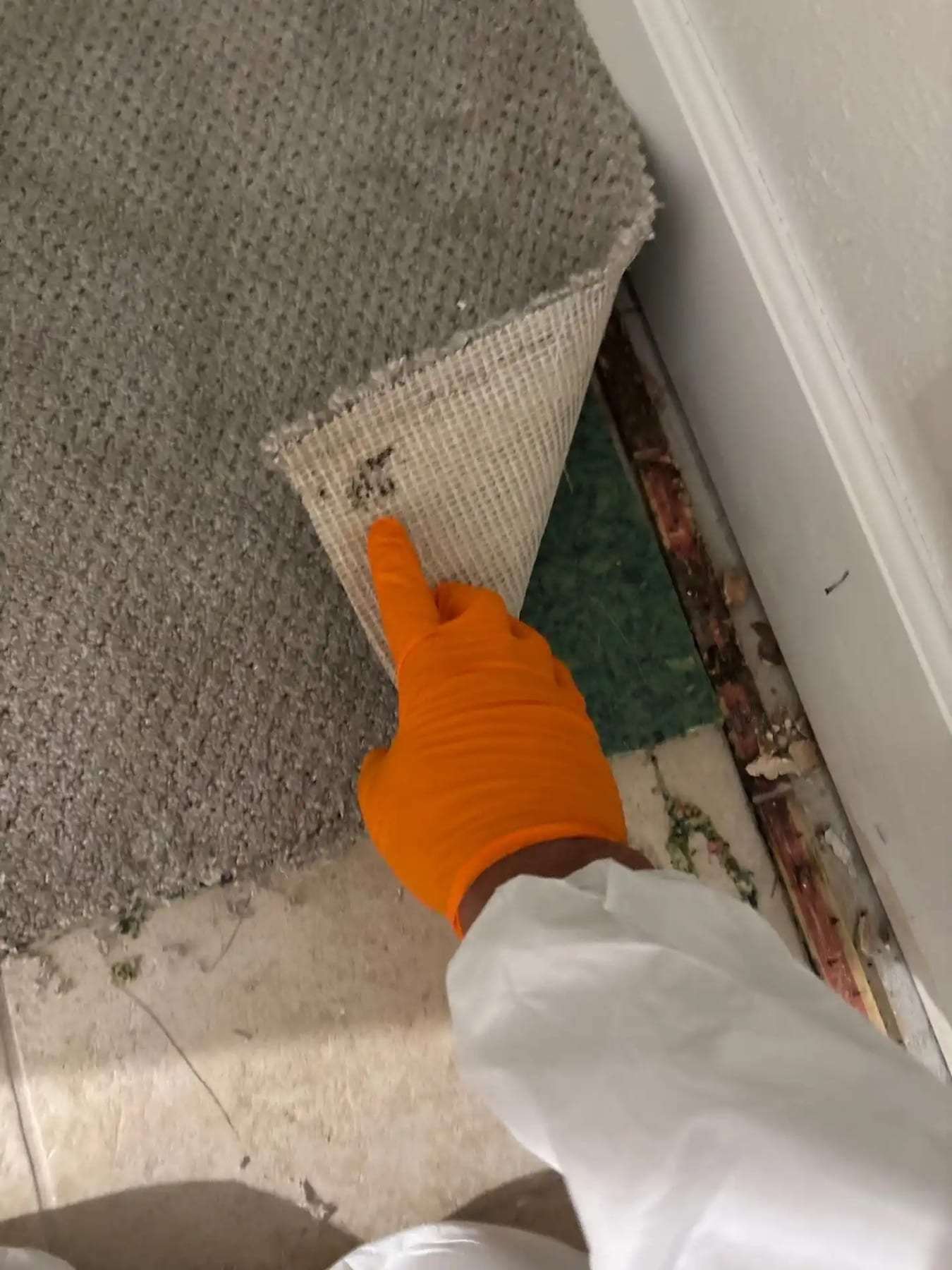
Gloved hand lifting the corner of a carpet to show the pad and tack strip. Illustrative only: this photo is not from a job tied to this site or a specific address.
Treat, seal or remove?
Professionals usually work through these options in order, from least to most invasive.
- IfOdor is faint and the surface is hard or paintedClean and treat the surface with a neutralizer, let it dry fully, and recheck after a humid day.
- IfOdor persists in bare or unfinished wood after treatmentAn odor-blocking primer, often shellac-based, can seal the remaining residue in place. This is common on subfloor undersides and framing.
- IfDrywall paper or insulation behind it took a direct hitCutting out and replacing the affected section is usually more reliable than trying to treat the paper face.
- IfPlaster walls smellPlaster is denser than drywall and often responds to treatment and sealing; removal is a larger job, so try the less invasive steps first.
- IfCarpet pad under the area smellsReplace the pad and treat the subfloor or slab beneath before new pad goes down.
Materials and what to expect
| Material | Absorbs? | Common outcome |
|---|---|---|
| Painted trim and doors | Little | Clean and treat |
| Bare subfloor and joists | Yes | Treat, then seal with odor-blocking primer |
| Drywall | Yes, through the paper face | Treat if light; replace sections if heavy |
| Original plaster | Somewhat | Treat and seal; removal rarely needed |
| Fiberglass insulation in walls | Yes | Remove where accessible and affected |
| Concrete basement slab | Somewhat, at cracks | Scrub, treat, and seal cracks |
Before opening walls
Confirm the source outside is handled
No point removing drywall if a porch or window well outside is still releasing odor into the same wall.
Narrow it down
Smell low and high along the wall, at outlets and at baseboards. Odor often concentrates at the bottom of a wall cavity.
Think about older materials
In houses of this age, some textures, joint compounds, flooring and insulation may contain asbestos or lead paint. Colorado requires testing before certain demolition work; ask a qualified inspector and check CDPHE guidance before cutting.
Ask about permits
Small patches usually need nothing, but larger removals or changes to framing may involve Denver's permitting office. Ask before work begins.
General information for Washington Park, not a quote or professional advice. In an emergency, call 911.