Why porches are the classic spray zone
Many houses around Washington Park have front porches built a few feet above grade on brick piers or a framed base, often enclosed with lattice, siding or a short masonry wall. The space underneath is dry, sheltered, dark and close to food sources in yards and alleys. To a skunk looking for a den, it is ideal.
When a skunk under the porch is startled, by a neighbor walking past at night, by another animal or by someone poking around with a flashlight, it may spray inside that enclosed space. The oil lands on the underside of porch boards, on framing, on the soil and on anything stored there. Because the porch is attached to the house, the odor follows the easiest paths indoors: gaps where the porch framing meets the foundation, old vents, mail slots, the front door threshold and basement windows set just below the porch.
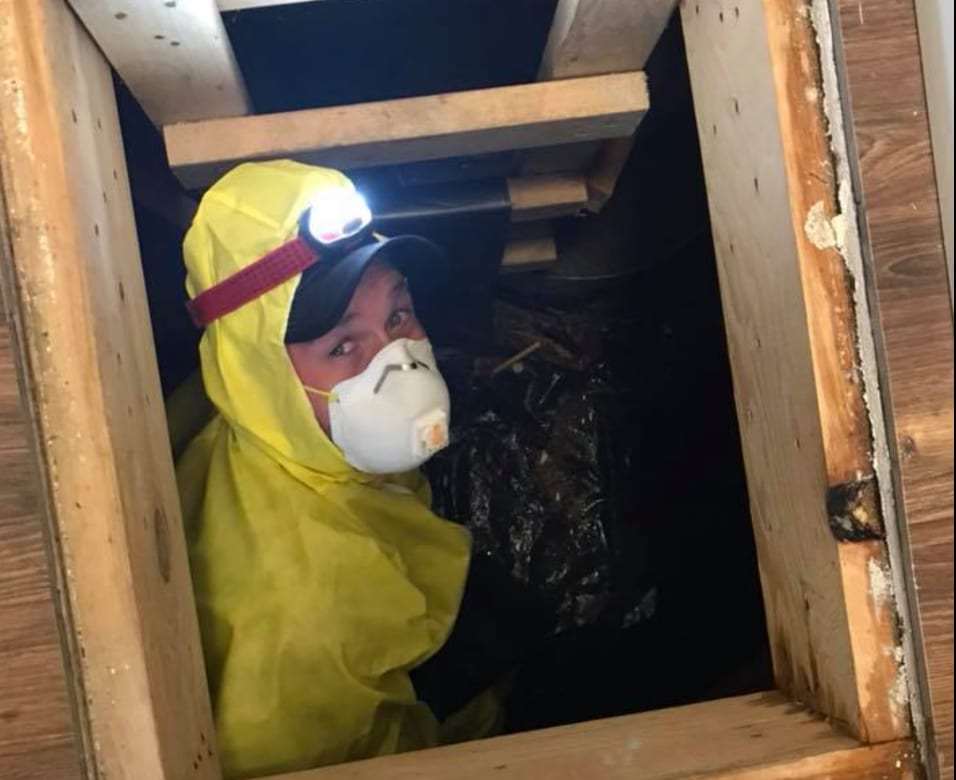
Technician in protective gear and a headlamp entering a crawlspace hatch. Example of the work involved; the photo does not show a specific property or a job for this site.
A sensible order of operations
Porch situations go wrong mostly when steps happen out of order.
Confirm whether the animal is still there
Look for fresh digging at the porch edge, a worn entry hole, or tracks in loose soil. Loosely stuffing newspaper into the opening and checking whether it has been pushed aside overnight is a common low-risk test.
Bring in licensed wildlife control if it is
A wildlife operator can remove the animal or use a one-way exit, and Colorado places limits on moving skunks. Do not block an opening with a skunk, or young, still inside.
Protect the inside of the house
Close front windows, set the HVAC fan to auto, and keep the front door closed as much as practical while the source is still active.
Get access to the spray zone
Treatment usually requires reaching under the porch, which can mean removing a lattice panel or a section of skirting.
Neutralize outside, then inside
Treat porch framing, board undersides and soil first, then rooms that picked up odor, so indoor work is not undone by a source still releasing smell.
Seal the porch base
Once the area is clean and confirmed empty, close it with buried hardware cloth or a solid skirting so the next skunk cannot move in.
Quick decisions for porch spray
- IfThe smell is sharp and fresh and there are signs of activityTreat it as an occupied den. Wildlife control comes before any odor work.
- IfThe smell is old and only returns when it rainsThe animal may be gone, but residue remains under the porch. Treatment needs to reach the soil and the board undersides.
- IfThe front rooms smell but the porch area barely doesLook for an indoor pathway: a duct, a crawlspace connection, or fabric near a window that absorbed odor.
- IfThe porch is a historic feature you do not want to alterAsk about access that removes and replaces skirting rather than cutting boards, and check with the city before changing a designated structure.
General information for Washington Park, not a quote or professional advice. In an emergency, call 911.